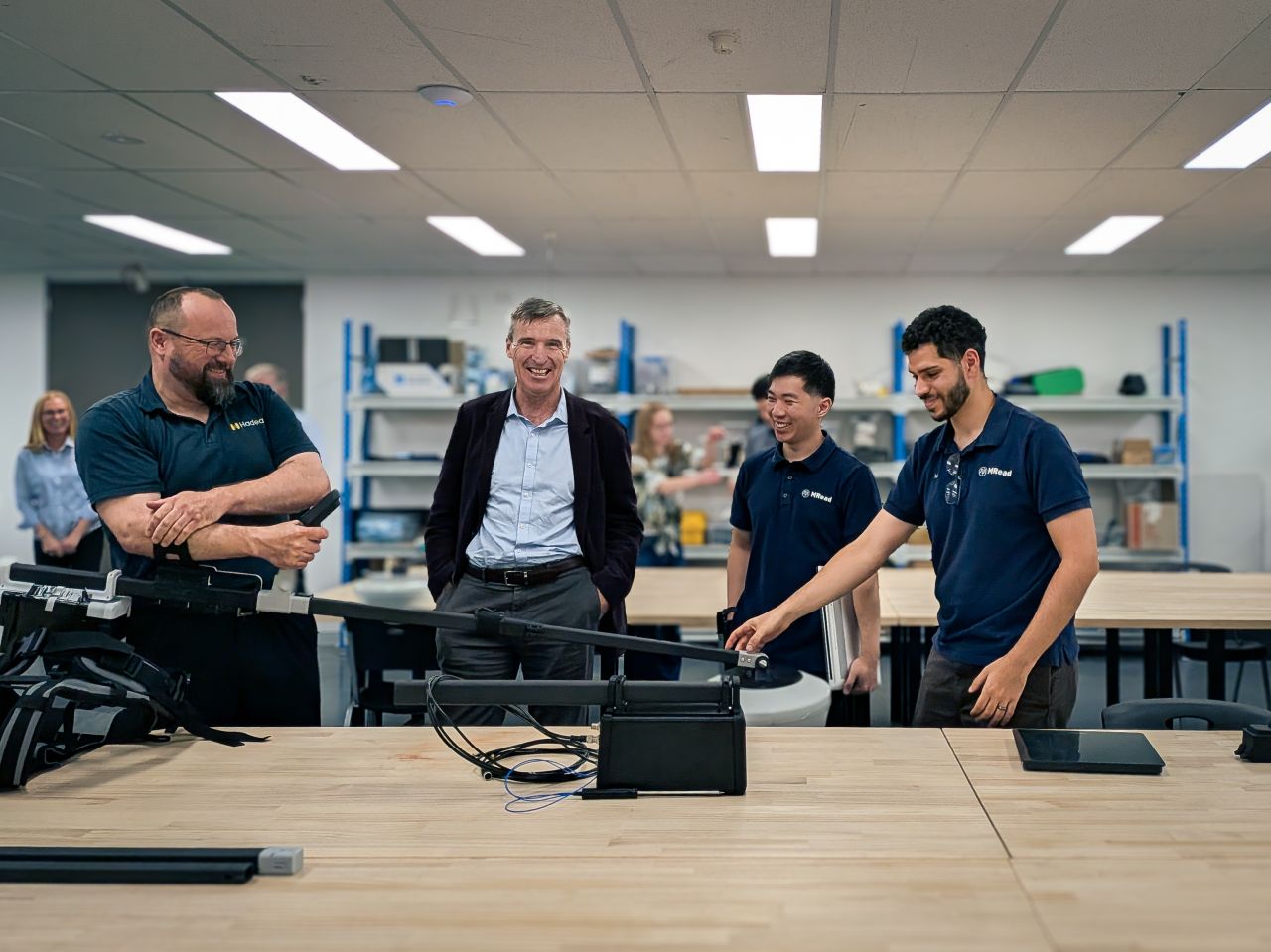
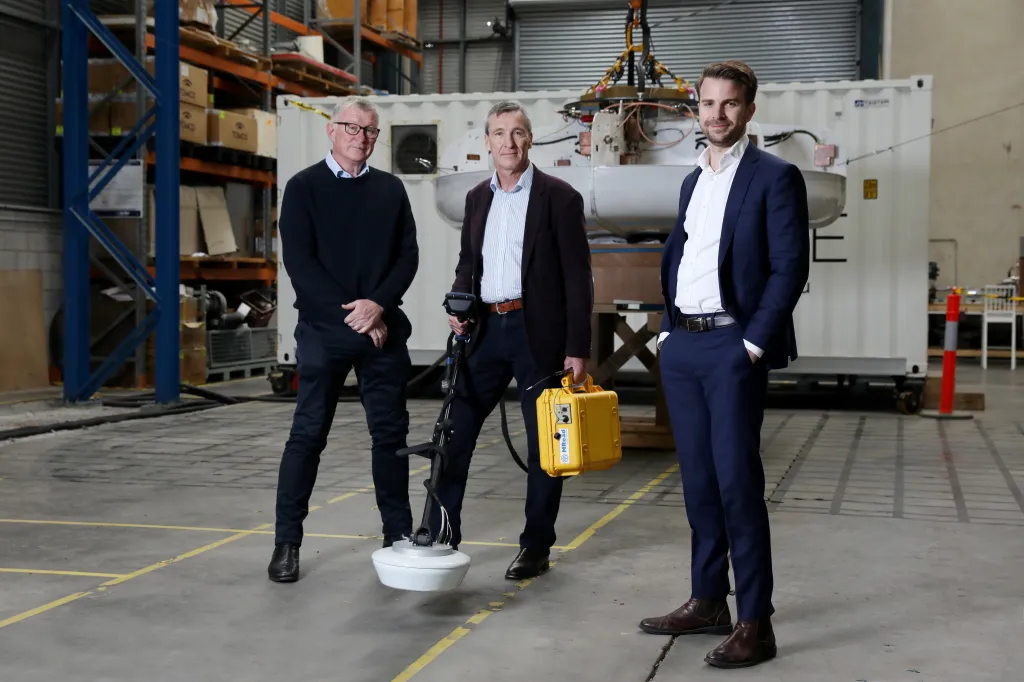
On the Lucas Heights Science and Technology Centre campus, south of Sydney, 28 scientists and engineers are working across two research groups — Magnetic Resonance and X-ray Technology — in labs that sit steps away from pilot-scale nuclear magnetic resonance testing facilities, a neutron research space and an X-ray bunker. It is, by any measure, an unusual environment. And the technology it has produced is equally unusual.
The CSIRO article traces the origin of that technology to a single moment of lateral thinking. A colleague returned from a conference where researchers from King’s College London were using radio waves to detect explosives in a security context. The question that followed — could similar techniques detect minerals? — set the team on a path that, more than two decades later, culminates in MagnaTerra Technologies.
“The site has a very high bar on safety culture and a lot of knowledge around the processes we’re working on. It’s an excellent site for our group to be co-located.”
Dr David Miljak, Research Director, CSIRO Sensing and Sorting
From a single measurement to global deployment
The team’s first successful measurement of a mineral sample came in 2001. What followed was years of experimentation and — critically — engineering. The underlying physics was one challenge; turning it into a system that could operate reliably at a mine site, surviving heat, dust, vibration and the sheer scale of industrial ore processing, was another entirely.
Senior engineer Dragoslav Milinkovic led the effort to shrink enormous power requirements into compact, field-deployable systems. The challenge, as he described it, is fundamental: the sensing process requires pulsing 50 to 100 kilowatts of radio-frequency power into ore and listening for an extremely faint signal in response. That requires converting standard grid power into precise, high-frequency RF energy — a significant engineering problem that Milinkovic’s team solved by building custom electronics in-house.
“You hit the ore with 50 to 100 kilowatts of pulsed power and listen for a tiny signal back. It’s a huge RF engineering challenge.”
Dragoslav Milinkovic, Senior Engineer, RF and Digital Systems, CSIRO
That engineering breakthrough led directly to the launch of NextOre in 2017, which brought CSIRO’s bulk ore sorting technology to copper mining operations in Chile, Zambia and the Philippines. The system enables miners to scan ore at the point of extraction and divert barren waste rock before it enters the processing plant — reducing energy, water and chemical consumption while increasing the grade of material being refined.
Miniaturising a mine-site sensor into a landmine detector
The CSIRO article gives significant attention to the engineering challenge that MRead presented the team: taking technology scaled for industrial ore processing and compressing it into a device light enough for one person to carry through a post-conflict minefield. The result had to withstand heat, humidity, dust and physical shock — the conditions in which humanitarian demining organisations operate.
Dr Peggy Schönherr, Team Leader for Magnetic Resonance Instrumentation, led the miniaturisation effort. The physics of detecting RDX in soil is closely related to detecting copper in rock — both involve tuning RF pulses to the resonance frequency of a specific molecular target and reading the response. But the hardware constraints could not have been more different.
“We had to rethink how the sensor components were arranged and invent several new elements to make it work. In just 18 months, the team built two working devices.”
Dr Peggy Schönherr, Team Leader, Magnetic Resonance Instrumentation, CSIRO
Dr Schönherr travelled to Angola herself to support the field trials with The HALO Trust — one of the world’s leading humanitarian demining organisations. An estimated 110 million active landmines are scattered across 70 countries, causing around 5,700 casualties in 2023 alone. Current clearance rates of 160,000 to 200,000 mines per year mean the problem will take generations to resolve using existing methods. MRead’s MR-based MineReader, which detects the molecular signature of RDX directly rather than any metal component, has the potential to cut clearance time by up to 30% and dramatically reduce the false positive rate that slows conventional metal detectors.
“It was incredible to see deminers using our device and to understand how long it takes to clear even a small area. Getting their feedback helped us understand the real-world challenges they face.”
The next frontier: lithium
The CSIRO feature also previews what the sensing and sorting team is working on now. With global demand for lithium — a critical mineral for battery technology and the energy transition — growing rapidly, the team is developing magnetic resonance sensing technologies capable of identifying lithium-bearing rocks, specifically spodumene in igneous pegmatites.
Dr Richard Yong, who leads the Magnetic Resonance Development team, explains that lithium sensing requires reintroducing large electromagnets — similar in principle to those used in medical MRI machines — that the team had originally engineered around for copper sensing. Integrating the kind of powerful static magnetic field that lithium detection requires, into a form that can operate reliably and safely at a mine site, is the problem the team is now working to solve.
“We’ve got a few runs on the board with the copper-sensing and de-mining technologies, and now we’re trying to develop sensing technologies for lithium — a critical mineral.”
Dr Richard Yong, Team Leader, Magnetic Resonance Development, CSIRO
Field trials for lithium sensing are expected to commence within 12 to 18 months, with industry partnership funding already in place to accelerate the later stages of development. If successful, the technology could transform the economics of lithium sorting at Australian mine sites — with material implications for the country’s competitiveness in the global critical minerals supply chain.
The company that science built
The CSIRO article closes with a reflection on what the Lucas Heights team has collectively achieved: a research program that began as a spark of curiosity at a conference has grown into a $150 million commercial platform with technology deployed across three continents and applications ranging from the economics of copper production to the safety of post-conflict communities.
For MagnaTerra, the CSIRO feature matters beyond the recognition it represents. It is a reminder that the company’s competitive advantage is not just commercial — it is scientific. The same team that spent two decades solving the hardest problems in magnetic resonance sensing is still active, still publishing, and still discovering what the technology can do next. MagnaTerra does not sit downstream of that work; it is part of it.
This article draws on reporting by Jane Nicholls and Keirissa Lawson, published by CSIRO on 12 September 2025. Read the original feature: Inside the lab: CSIRO’s recent sensing and sorting commercialisation success →